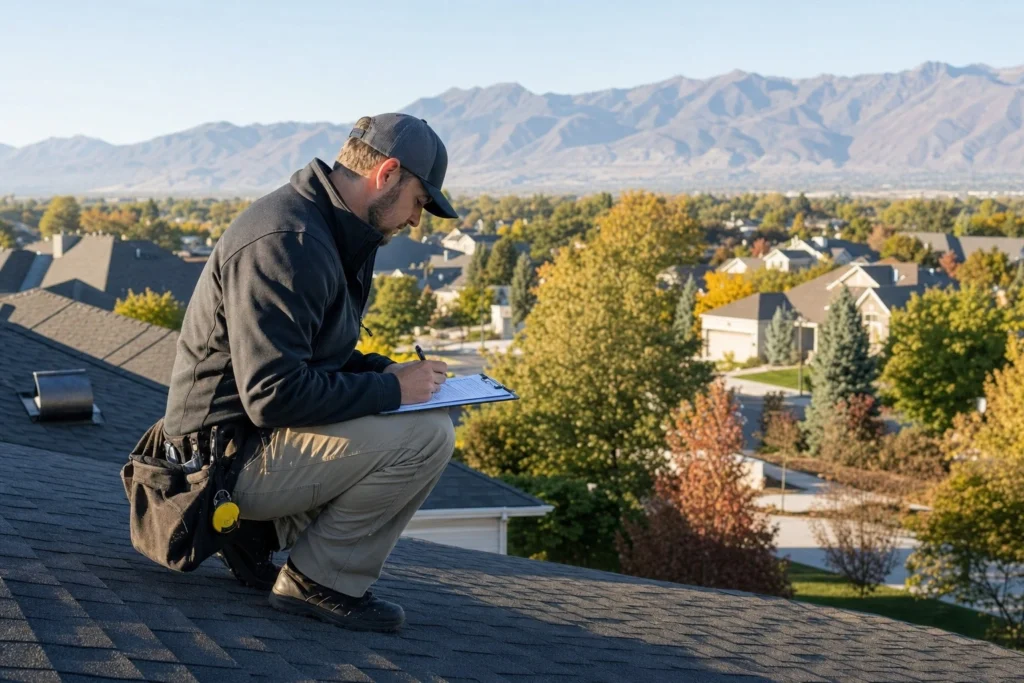
A roof inspection is the most useful thing a homeowner can do before any roofing decision — repair, replacement, or neither. It establishes what’s actually there: the condition of shingles, flashing, decking, gutters, and penetrations. Without an inspection, repair decisions are based on guesswork. With one, they’re based on documented findings.
South Valley Roof Repair connects homeowners across South Valley and Salt Lake County with local roofing professionals who conduct thorough inspections and provide honest assessments — whether the answer is a minor repair, a full replacement, or simply monitoring a roof that’s in reasonable shape.
Reasons to Request a Roof Inspection
- After a hail event, windstorm, or heavy snow load
- Before buying or selling a home
- When a roof is approaching 15–20 years of age
- After noticing water stains on interior ceilings or walls
- Following any visible shingle damage from the ground
- Before filing an insurance claim for storm damage
- As a routine maintenance check every 2–3 years
- When preparing for a roof repair or replacement estimate
Why Roof Inspections Matter More in Utah
Post-Storm Assessment — Utah’s hail seasons and wind events cause damage that requires close inspection to identify. Soft spots from hail impacts, lifted flashing, and compromised ridge caps are not visible without getting on the roof.
UV and Elevation Effects — At Salt Lake Valley elevations, UV radiation degrades asphalt shingles faster than manufacturer estimates. Granule loss, surface cracking, and sealant strip failure develop earlier than homeowners expect.
Ice Dam Risk Evaluation — A roofing professional can assess whether a roof’s ventilation and insulation configuration creates conditions favorable to ice dam formation — a significant leak risk in Utah winters.
Age-Related Deterioration — Roofs approaching 20 years in Utah conditions may be closer to end-of-life than they appear. An inspection establishes accurate remaining lifespan before a failure event forces the issue.
What a Roof Inspection Covers
- Shingle Condition — Assessment of granule loss, cracking, curling, lifting, and impact damage across all roof sections.
- Flashing Integrity — Inspection of all flashing locations — chimney, skylights, pipe boots, valleys, and roof-wall intersections.
- Roof Deck Condition — Where accessible, assessment of decking for signs of moisture damage, rot, or structural compromise.
- Gutters and Drainage — Evaluation of gutter condition, attachment, and drainage path. Granule accumulation in gutters indicates shingle wear.
- Attic Ventilation — Assessment of whether attic ventilation is adequate. Inadequate ventilation accelerates shingle deterioration and creates ice dam risk.
- Penetrations and Accessories — Inspection of all roof penetrations — vents, pipes, skylights, chimneys — and the sealing conditions around each.
Roof Inspection and Insurance Claims
A professional inspection report is one of the most useful documents in a storm damage insurance claim. It establishes the type and extent of damage, the likely cause, and the affected components. Getting an inspection report before contacting your insurer puts documented evidence in the conversation from the start. See the insurance coverage guide for more on how the Utah claims process works.
Does a Roof Inspection Mean I Need Repairs?
Not necessarily. A roof inspection establishes condition — it does not commit you to any repair work. Many inspections conclude that a roof is in acceptable condition and simply needs to be monitored. The value of the inspection is knowing what you have, not being told what to buy.
Can a Roof Inspection Find Problems Before They Cause Leaks?
Often, yes. A professional inspection can identify flashing failures, deteriorated shingles, ventilation problems, and storm damage before those issues develop into active leaks or interior damage. Catching a $300 flashing repair before it becomes a $3,000 water damage event is one of the strongest arguments for routine inspection.
Roof Inspection — Frequently Asked Questions
How long does a roof inspection take? Most residential roof inspections are completed in 45 minutes to 2 hours depending on roof size, complexity, and whether attic access is included.
How often should a Utah roof be inspected? Every 2–3 years as routine maintenance, and after any significant storm event. Roofs approaching 15–20 years of age benefit from annual inspection.
Can a roof inspection be used for an insurance claim? Yes. A professional inspection report is useful documentation for storm damage claims. It establishes damage type, cause, and extent before an insurance adjuster’s assessment.
Roofing Services in South Valley & Salt Lake County
- Roof Repair — when the inspection identifies localized damage
- Roof Leak Repair — when active water intrusion is present
- Storm Damage Roof Repair — when the inspection follows a weather event
- Roof Replacement — when inspection findings indicate end-of-life
Metal roofs benefit from the same kind of periodic inspection — see our metal roofing page for what an inspection looks for on metal panels and seams.
Homeowners in West Jordan, Murray, and Riverton can request a roof inspection through South Valley Roof Repair.
Request a Roof Inspection in South Valley
Whether you’re concerned about storm damage, planning a repair, or just want to know what condition your roof is in, a professional inspection is the right first step.