Choosing a roofing material for a Utah home is a longer-term decision than most homeowners realize — and getting it wrong means repeating the project in 15 years instead of 40. Metal roofing has gained real traction in South Valley and across Salt Lake County over the past decade.
Utah’s climate is hard on roofing materials. Intense summer UV exposure, freeze-thaw cycles, heavy winter snow loads, and periodic hail events create conditions that accelerate wear on standard asphalt shingles. Metal roofing is engineered to handle all of it. If you’re evaluating a roof replacement or building a new home in South Valley, understanding how metal roofing performs in Utah’s specific conditions will help you make the right decision for your property.
Signs You May Be a Candidate for Metal Roofing
- Your current asphalt shingles are 15+ years old and showing granule loss, cracking, or curling
- You’ve experienced repeated leak repairs in the same areas
- You want to reduce long-term maintenance costs and avoid another replacement in 15–20 years
- You’re planning to stay in the home for 20+ years and want a material that lasts
- A roofing professional has flagged significant structural wear on your current deck
Why Utah Roofs Require Special Attention
South Valley sits in a climate zone that tests roofing materials year-round. Summer temperatures regularly exceed 100°F, and UV radiation at Utah’s elevation accelerates asphalt degradation faster than in coastal states. Winters bring freeze-thaw cycling, which stresses seams and flashings. Spring storms produce hail that leaves impact damage on softer materials. Metal roofing addresses these pressures directly — reflecting UV rather than absorbing it, maintaining structural integrity through freeze-thaw cycles, and carrying higher impact ratings than standard asphalt.
Common Types of Metal Roofing in Utah
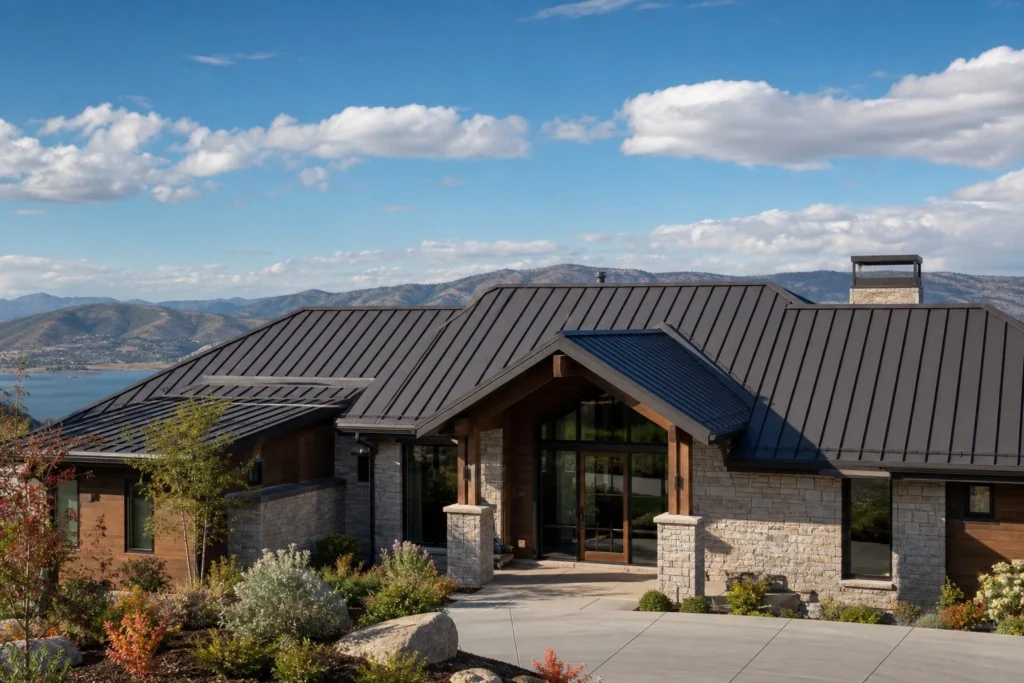
Standing Seam Metal Roofing — The premium option for residential applications. Panels run vertically from ridge to eave, with concealed fasteners that lock together at raised seams. Standing seam is the most weather-tight design available — fasteners never penetrate the panel face, which eliminates the primary leak point of exposed-fastener systems. Expected lifespan: 40–50+ years in Utah conditions.
Metal Shingles — Designed to mimic the appearance of asphalt, slate, or wood shake while delivering metal’s durability. They’re a common choice for homeowners in established South Valley neighborhoods where traditional appearance is a priority. Expected lifespan: 30–45 years.
Snow and UV Performance — Both standing seam and metal shingles carry Class A fire ratings and are available in Class 4 impact-resistant ratings — the highest available. Metal roofs can be paired with snow guards to control sliding snow, and the smooth surface of standing seam sheds snow and ice more readily than textured materials.
Metal vs. Asphalt in Utah — Decision Framework
The core tradeoff is upfront cost vs. lifecycle cost. Metal roofing typically costs 2–3x more than asphalt at installation. However, a well-installed metal roof in Utah conditions can last 40–50 years — potentially twice the lifespan of quality architectural shingles. For homeowners planning to stay long-term, the math often favors metal when you factor in avoided replacement costs and reduced maintenance.
- Upfront Cost: Metal is higher (2–3x asphalt) | Asphalt is lower
- Lifespan in Utah: Metal 40–50 years | Asphalt 20–25 years
- Snow Shedding: Metal — excellent | Asphalt — moderate
- UV Performance: Metal — superior | Asphalt — degrades faster at elevation
Insurance Considerations
Some Utah homeowners insurance carriers offer premium discounts for Class 4 impact-resistant metal roofing. If your current roof was damaged in a storm, a roofing professional can document the damage to support an insurance claim before you commit to a material choice. See the insurance coverage guide.
Does Metal Roofing Hold Up in Utah Snow?
Yes. Metal roofing — particularly standing seam — handles Utah snow loads well. Its smooth surface sheds snow more readily than asphalt, and its structural integrity is unaffected by freeze-thaw cycling that degrades other materials over time.
Is Metal Roofing Worth the Cost in Salt Lake County?
Yes, for long-term homeowners. Metal roofing costs more upfront than asphalt but lasts 40–50 years in Utah conditions — roughly twice the lifespan of quality architectural shingles — making the lifecycle cost competitive for homeowners who plan to stay in the property.
Metal Roofing — Frequently Asked Questions
How long does a metal roof last in Utah? Standing seam metal roofing typically lasts 40–50 years in Utah. Metal shingles generally run 30–45 years. Both significantly outlast standard architectural shingles (20–25 years) in Utah’s UV and freeze-thaw conditions.
Can metal roofing be installed over existing shingles? In some cases, yes — but a roofing professional will need to assess deck condition and local code requirements before recommending an overlay.
Does metal roofing make noise in rain or hail? With proper underlayment and attic insulation, metal roofing is not significantly louder than asphalt during rain. Hail events will produce more sound, but the material sustains far less damage.
Related Services
Serving South Jordan, Draper, and West Jordan homeowners evaluating metal roofing options.
Ready to Find Out If Metal Roofing Is Right for Your South Valley Home?
Request a free roof inspection — a roofing professional will assess your current roof, deck condition, and discuss material options suited to your home and budget.