
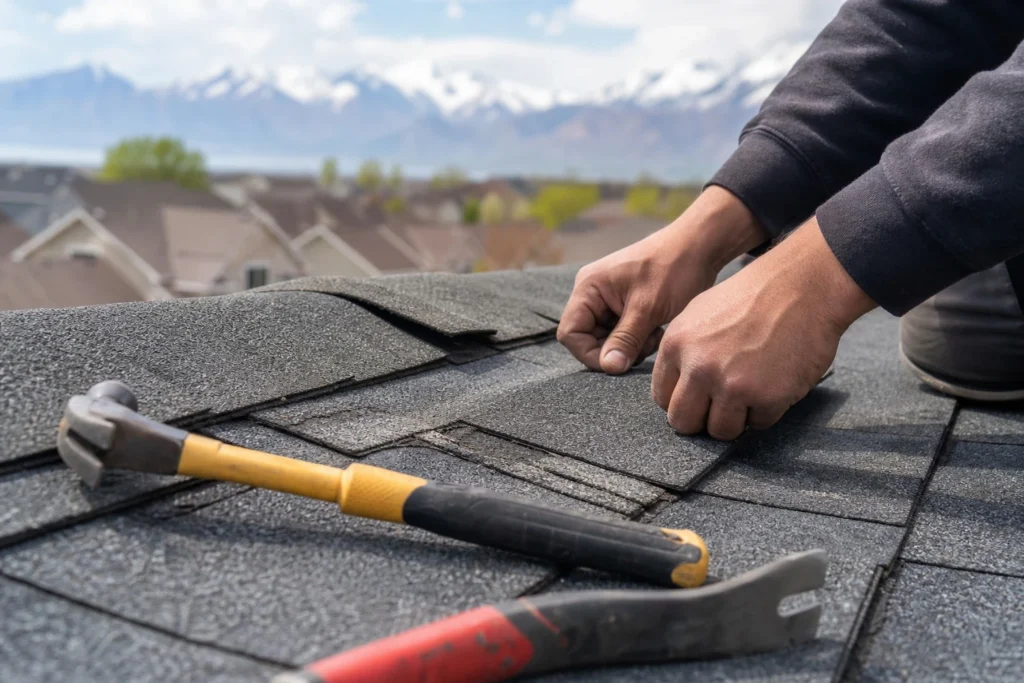
Roof repair cost in Utah is one of those questions where the honest answer is: it varies significantly depending on what’s actually wrong. A single cracked shingle is a different scope than a failed valley flashing or a section of deck that’s been holding moisture for two seasons. South Valley homeowners shopping for repair quotes often run into wide price variation — not because contractors are inconsistent, but because repair scopes differ substantially based on damage type, material, and how far the problem has progressed.
Signs Your Roof Needs Repair — Not Replacement
Not every roof problem requires a full replacement. Repair is appropriate when damage is localized and the surrounding roof structure is sound. Common repair scenarios in South Valley include isolated shingle damage, flashing failure at a chimney or pipe boot, missing or lifted shingles after a wind event, or a single leak point that hasn’t spread to adjacent sections. If you’re unsure, the repair vs. replacement guide covers that decision in detail.
Why Utah Repair Costs Vary
Utah’s climate creates specific repair patterns. Freeze-thaw cycling causes flashing to separate at seams. UV degradation makes shingles brittle, so what starts as a cracked tab can develop into a failed section over a single winter. Hail damage that isn’t addressed promptly leads to accelerated granule loss, then cracked underlayment, then water intrusion. The longer a Utah roof problem sits unaddressed, the more the scope expands.
Cost Factors for Roof Repair in Utah
- Damage Type — Shingle replacement is the simplest and most predictable scope. Flashing repair requires more precise work. Valley replacement involves removing and re-sealing a complete drainage channel. Deck repair — replacing sections of sheathing that have absorbed moisture — is the most labor-intensive.
- Material — Asphalt shingle repairs are typically less expensive than metal or tile. Material costs and matching complexity vary.
- Pitch and Accessibility — Steeper roofs require additional safety equipment and slower movement, increasing labor cost. Single-story accessibility is typically less expensive than two-story configurations.
- Deck Condition — When a repair exposes underlying decking that has absorbed moisture, the scope expands. Deck replacement adds both material and labor cost.
- Storm-Related Factors — After a hail or wind event, demand for roofing services increases. Insurance claim involvement can also affect timelines and costs.
Is Roof Repair Covered by Homeowners Insurance in Utah?
Sometimes. Storm-caused damage from hail, wind, or falling objects is typically covered. Gradual wear, aging, and deferred maintenance are not. Documentation of the damage and its cause is critical to a successful claim. See the insurance coverage guide for more detail.
How Do I Know If I Need a Repair or a Full Replacement?
A roofing professional can assess both. They’ll evaluate the localized damage and the overall condition of the roof system. If the damage is isolated and the surrounding structure is sound, repair is typically the right call. If the roof is aging and has multiple problem areas, replacement may deliver better long-term value. See the roof inspection page and repair vs. replacement guide.
Frequently Asked Questions
How quickly should I address a roof repair in Utah? As soon as possible after damage is identified. Utah’s freeze-thaw cycles and storm patterns mean that small problems compound quickly. A minor shingle repair deferred through a Utah winter can become a deck repair by spring.
Why do roof repair quotes vary so much in Salt Lake County? Variation in quotes usually reflects different assessments of scope — particularly around deck condition and adjacent damage. A lower quote may not include deck inspection or may assume the existing underlayment doesn’t need replacement.
What’s the best time of year to schedule roof repair in South Valley? Late spring through early fall is the optimal window — dry conditions, moderate temperatures, and maximum adhesive effectiveness. Emergency repairs can be done year-round.
Related Resources
Start With a Professional Inspection
If you’re trying to figure out whether you’re looking at a repair or a replacement — and what either one might involve — a professional inspection is the right starting point.