
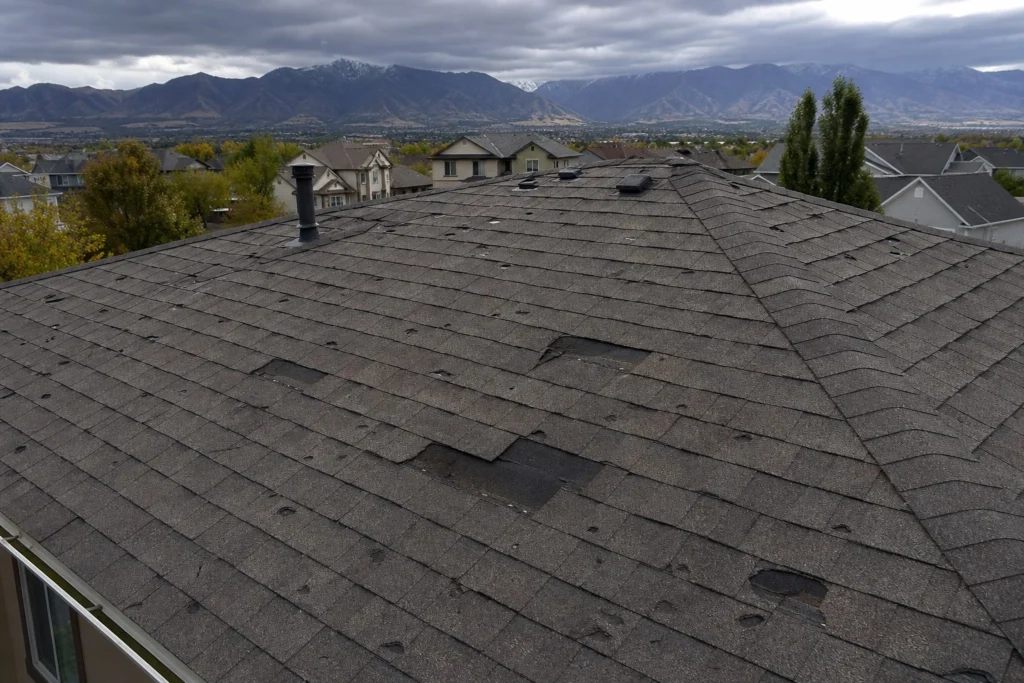
After a hail storm or wind event in South Valley, one of the first questions homeowners ask is whether their insurance will cover the roof. The honest answer is: it depends on what caused the damage — and how well you document it. Utah homeowners deal with some of the most active hail seasons in the western United States, particularly in Salt Lake County during spring and early summer.
What Homeowners Insurance Typically Covers
Sudden and accidental damage caused by covered perils is what most standard homeowners policies protect. In Utah, the most common qualifying roof damage scenarios are:
- Hail damage — Hail is a named peril in most standard policies. Class 4 hail can dent metal flashing, crack shingles, strip granules, and fracture the asphalt layer beneath.
- Wind damage — High winds that lift, crack, or displace shingles qualify as a sudden event.
- Falling objects — Tree limbs and debris that penetrate or damage roofing during a storm event qualify under most policies.
- Sudden water intrusion — A leak that originates from a storm-caused breach is typically covered.
What Homeowners Insurance Typically Does Not Cover
- Wear and aging — A roof that is past its service life and leaking due to gradual deterioration is not a covered claim.
- Deferred maintenance — If a roofing professional documented a problem and no repair was made, the insurer may argue negligence.
- Pre-existing damage — Damage that predates your current policy is not covered.
- Cosmetic-only damage — Some Utah policies include a cosmetic damage exclusion — surface dents from hail that don’t impair function may not qualify.
Why Utah Claims Require Documentation
Utah’s storm patterns mean roof damage claims are common — which means insurers in Salt Lake County are experienced at scrutinizing them. The difference between an approved claim and a denial often comes down to documentation quality.
- Date-specific storm records — NOAA storm data documenting hail size and wind speed on the storm date are strong supporting evidence.
- Pre-storm roof condition — If you have inspection records or photos showing the roof was in good condition before the storm, that’s evidence the damage is new.
- Professional inspection report — A written report from a roofing professional noting specific damage locations and storm-consistent patterns carries more weight than homeowner photos alone.
- Photos before cleanup — Granules in the gutters, dented flashing, and cracked shingles are best documented before any temporary repairs or cleaning.
How the Insurance Adjuster Process Works in Utah
After filing a claim, your insurer will assign an adjuster to inspect the roof. In Utah, adjusters handling storm-season volume may move quickly — which can mean a less thorough inspection. You have the right to be present during the adjuster’s inspection and to request that a roofing professional you trust be present as well.
If the initial adjustment feels incomplete or the settlement offer seems low, you can request a re-inspection or hire a public adjuster. Having your own roofing inspection documentation is the single most useful tool in that conversation.
Does Homeowners Insurance Cover Hail Damage to a Roof in Utah?
Yes, in most cases. Hail is a covered peril under standard homeowners policies in Utah. The damage must be from a specific storm event, not gradual wear, and should be documented with a professional inspection report and storm date records.
Will Insurance Pay for a Full Roof Replacement After Hail in Salt Lake County?
It depends on the policy. Some policies pay actual cash value (depreciated), while others pay replacement cost value. The extent of damage also matters — if hail damaged only a section of the roof, insurers may offer partial replacement unless structural integrity issues support a full replacement claim.
Cost Factors in Insurance Claims
Your deductible is the first cost variable — Utah policies increasingly include percentage-based deductibles (1–2% of home value) for wind and hail claims. Actual cash value vs. replacement cost value affects your out-of-pocket difference. Material upgrades beyond the covered scope are typically your cost to bear.
Frequently Asked Questions
How long do I have to file a roof damage claim in Utah? Policy deadlines vary — most insurers require prompt notification after a storm event, and waiting too long can complicate a claim by making it harder to isolate when damage occurred. Check your policy or contact your agent for specific filing windows.
Can I choose my own roofing contractor after a claim is approved? Yes. Your insurance policy covers the cost of repair or replacement — it does not require you to use the insurer’s preferred contractor.
What if my insurance denies my roof damage claim? You can request a re-inspection with your own roofing professional’s report as supporting documentation. You can also file a complaint with the Utah Insurance Department or hire a public adjuster to review the denial.
Related Resources
Start With an Inspection Before You Call Your Insurer
If you’ve had a recent storm event in South Valley or Salt Lake County and want to know what your roof actually looks like, start with an inspection. A roofing professional can document what they find and give you a clear picture of what a claim might cover.