
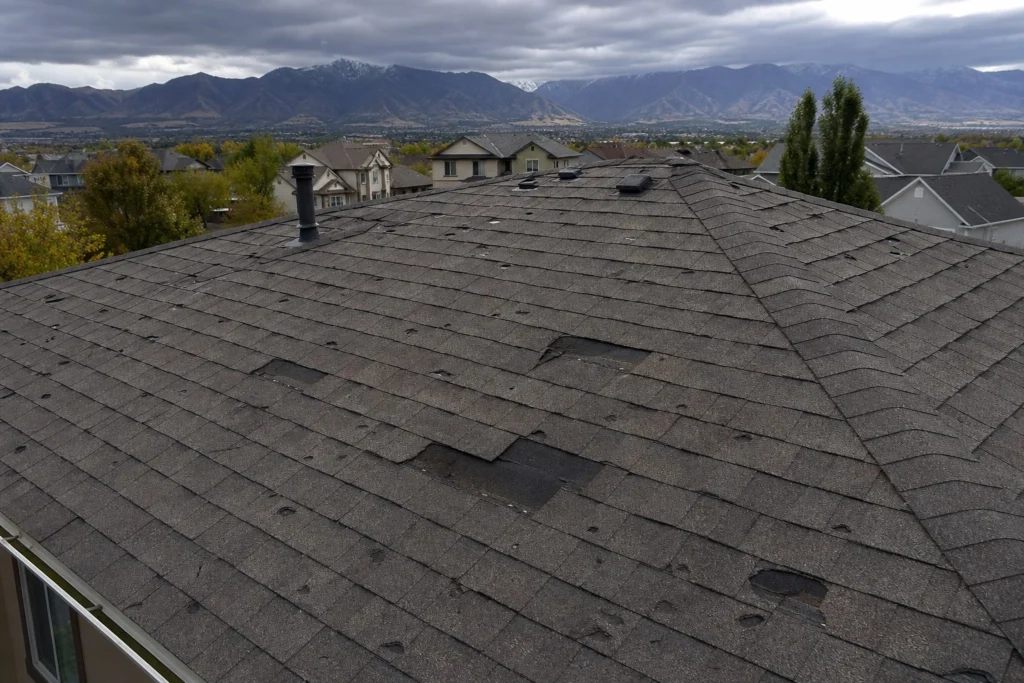
Utah storms can cause more roof damage than homeowners realize — and more than is visible from the ground. Hail impacts crack shingle surfaces and dislodge granules without creating immediate leaks. High winds lift flashing, loosen shingles, and deposit debris that punctures or abrades roofing surfaces. Heavy snowfall adds structural load that stresses aging materials.
By the time a storm-related leak appears inside, the damage to the roof surface has often been present for weeks or months. South Valley Roof Repair connects homeowners across South Valley and Salt Lake County with local roofing professionals who can assess storm damage accurately, document what’s there, and make the right repair.
Signs Your Roof May Have Storm Damage
- Dented or cracked shingles visible from the ground or attic
- Granules collecting in gutters or downspouts after a hail event
- Missing, lifted, or displaced shingles after high winds
- Damaged or bent ridge caps, vents, or flashing
- Dents on metal components — gutters, flashing, vents, skylights
- Water stains on interior ceilings appearing after a storm
- Debris impact marks on roof surface
- Damaged fascia or soffit following wind events
Why Utah Storm Damage Is Different
Hail Frequency and Severity — The Salt Lake Valley and surrounding areas experience regular hail events, particularly in spring and early summer. Hail damage that looks cosmetic often has functional consequences for the roof’s remaining lifespan.
High Wind Events — Wind events through the Salt Lake Valley are common, particularly during cold front passages and canyon outflow events. Sustained winds can lift shingles, compromise flashing seals, and damage ridge caps — often without leaving obvious evidence at ground level.
Heavy Snow Load — Utah winters deliver significant snowpack. Accumulated snow weight stresses roof structures, particularly on low-pitch roofs or roofs with existing material weakness.
Spring Freeze-Thaw — Late-season storms followed by freeze-thaw cycling open up existing cracks or gaps in roofing materials. Storm damage that seems minor in fall can develop into active leaks by spring.
Common Types of Storm Damage
- Hail Damage — Hail impacts leave characteristic bruise marks on asphalt shingles — soft spots where the mat beneath the granule surface has been fractured. These areas absorb moisture faster, accelerating UV degradation and eventual water intrusion.
- Wind Damage — High winds lift shingle tabs, break the adhesive seal strips, and in severe cases displace shingles entirely.
- Debris Impact — Tree branches and airborne material carried by storm winds can puncture, crack, or abrade roofing surfaces.
- Ice Dam Damage — Snowmelt that refreezes at the eaves creates ice dams that force water back up under shingles.
Storm Damage Repair vs. Full Replacement
A repair is the right call when damage is concentrated in one section, the overall roof is in good condition and under 15 years old, and the roof deck is sound. Replacement becomes the more appropriate discussion when hail damage is widespread across the entire roof, the roof was already aging before the storm, or an insurance adjuster has recommended replacement. For a detailed decision framework, see the roof repair vs. replacement guide.
When Insurance Is Part of the Conversation — Storm and hail damage is among the most commonly covered roof damage under Utah homeowners insurance policies. Getting a roofing professional’s inspection report before contacting your insurer strengthens your claim. See the insurance coverage guide for more on the Utah claims process.
Does Hail Always Cause Visible Roof Damage?
Not always from the ground. Hail impacts on asphalt shingles often create soft spots and granule displacement that are only visible with a close physical inspection. Post-storm inspection by a roofing professional is the only reliable way to assess hail damage accurately.
Can Storm Damage Lead to Roof Leaks Months Later?
Yes. Hail impacts, lifted shingles, and damaged flashing may not create immediate leaks. Water intrusion often develops later as continued weather exposure worsens the compromised area over time. Post-storm inspection catches this before the damage compounds.
What Affects Storm Damage Repair Costs?
Damage Type and Extent — Localized wind damage to a few shingles costs far less than widespread hail damage requiring partial or full reshingling. For typical repair cost ranges, see the roof repair cost guide.
Roofing Services in South Valley & Salt Lake County
- Roof Repair — broader structural and surface repairs
- Roof Leak Repair — targeted leak diagnosis following storm intrusion
- Roof Inspection — general condition assessment
- Roof Replacement — when storm damage warrants full replacement
Metal roofing tends to hold up well in hail and high wind, but panels, seams, and fasteners can still be affected — our metal roofing page covers what to check after a storm.
Homeowners in Herriman, Bluffdale, and South Jordan can request a storm damage assessment through South Valley Roof Repair.
Request a Storm Damage Roof Inspection in South Valley
If your roof has been through a hail event, high winds, or heavy snow load, the right next step is a professional assessment — even if damage isn’t immediately visible.